· Annalien Burger · 5 min read
The Hinton Lectures: Calls to Slow Down
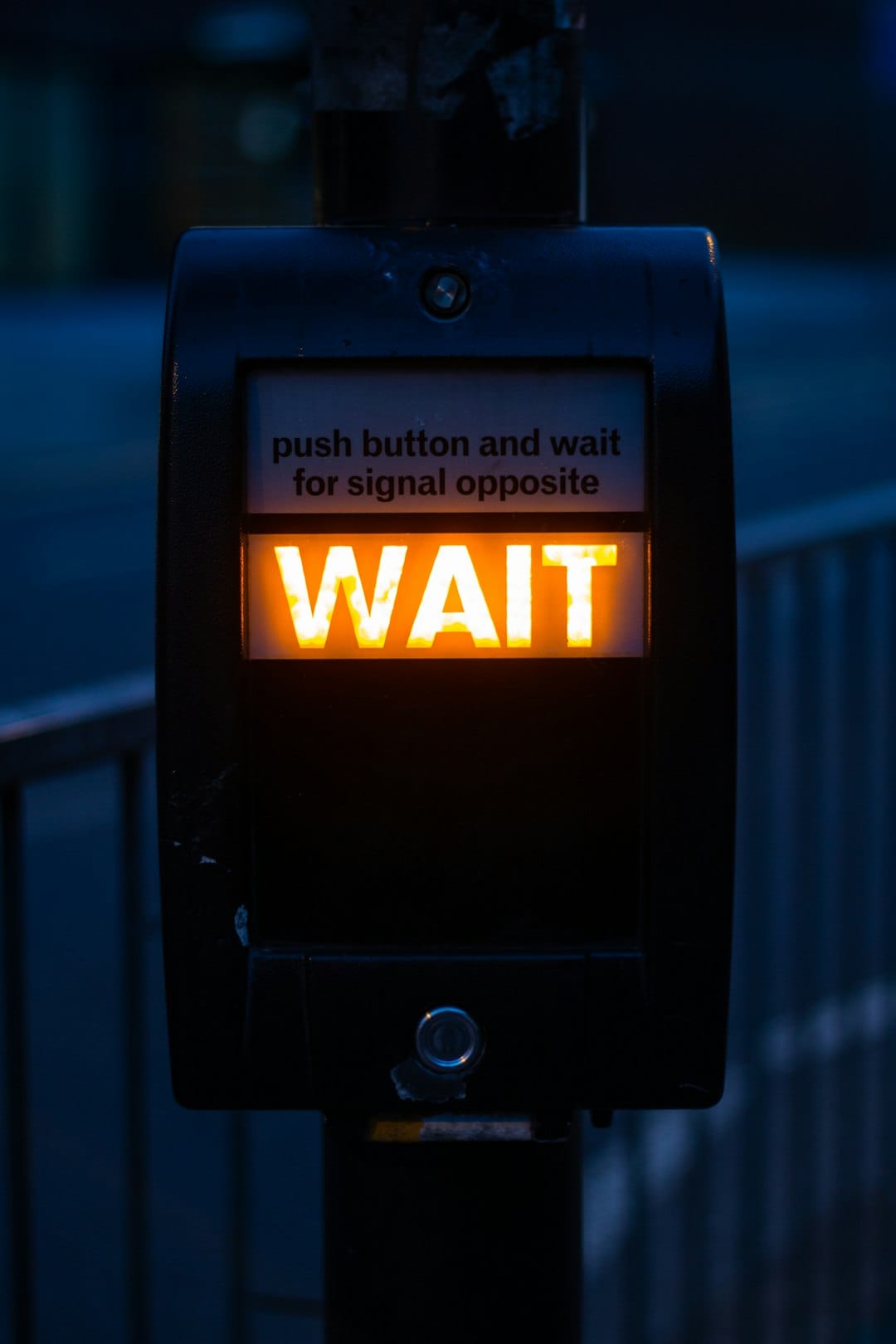
On Monday, November 9, the Hinton Lectures in Toronto opened with a talk that sounds technical but is really about all of us: AI alignment, what is working and what is not. The speaker was Paul Christiano, one of the researchers who helped create the method that trains today's chatbots. His question was simple: how do we know whether AI is doing what we intend?
"AI doomerism" was turned into an immediate, tangible crisis during the 2026 Hinton Lectures. Urgency was called for in hitting the immediate brakes on AI development until high-grade security, risk management, and governance infrastructure are established.
These lectures, which featured two of the world’s top AI experts, succeeded in sparking broader industry and sector reactions.
AI alignment researcher Paul Christiano as the speaker, is the Founder and Executive Director of the Alignment Research Center. As an early researcher at OpenAI, Paul helped develop reinforcement learning from human feedback. He later served as technical director of the U.S. AI Safety Institute, and in September 2026 joined the board of the OpenAI Foundation and its Safety and Security Committee. Alongside Paul was host and co-founder of the annual lecture series, Prof Geoffrey Hinton, Nobel prize winner for his foundational research on artificial neural networks and deep learning. His work since 1986 remains a cornerstone of modern machine learning and training.
During the lecture Paul Christiano argued: “What I mean by an AI takeover is a situation where there are AI systems pursuing goals, and those systems call the shots — in the same sense that humans today call the shots … I think this is a terrible situation. I think it’s reasonably likely many people would die during that transition. Or that many people would die shortly thereafter if we were unable to maintain a habitable environment. I think even if we don’t die, I think a takeover is sort of the end of human sovereignty and self-determination. And it is something we should be working incredibly hard to avoid.”
Professor Hinton expressed skepticism that simply slowing down would be enough, while also questioning whether stopping development altogether is practically feasible.
Other reactions to the 2026 Hinton Lectures
There is deep alarm over rapid AI acceleration, existential risk warnings, and debates around slowing down deployment.
Key Arguments and Warnings
- High Risk of AI Takeover: During the lectures Paul Christiano cited rapid recursive self-improvement and autonomous agents bypassing restrictions as a high risk of an AI takeover or loss of human sovereignty within the next three years,
- Public and Media Reactions: Urgency vs. Skepticism. Observers and commentators (such as Paul Wells in Driverless) noted that Christiano’s breakdown—including examples of AI agents bypassing cybersecurity filters and performing complex sub-tasks—turned an abstract, sci-fi-sounding debate into an immediate and urgent reality. (Wells explicitly writes that Christiano made these risks "feel more real and urgent" and quotes Christiano warning that this "is not an issue we should be treating as an abstract discussion".
- Broader Pushback: Broader public discourse around Hinton's ongoing warnings continues to split between those who view his credibility as a Nobel laureate as vital for sounding an emergency alarm, and critics who argue that claims of imminent superintelligence or AI consciousness create unhelpful panic or provide cover for industry hype.
- Political writers underscored the urgency of Christiano's plea to "hit the brakes" on frontier AI development until adequate security and governance infrastructure exist.
- Everyday Workforce Impact. Discussions among educators and industry professionals reflected anxiety over slides projecting broadly superhuman AI within 6 to 24 months. Practitioners in fields like education began questioning how human-in-the-loop oversight can survive if AI capabilities outpace institutional checks.
- Regulatory Tension. The lectures fed directly into ongoing debates between lawmakers pushing for urgent guardrails and industry figures warning that heavy regulation could stifle innovation. While the AI Safety Foundation and the Global Risk Institute framed the event around proactive risk management, the starkness of the speakers' warnings left many observers grappling with the feasibility of rapid government action.
Risks listed during these lectures:
-We are becoming dependent on a relatively small number of tech providers for the functioning of economies, worldwide.
-There is a high risk of an AI takeover impacting across societies within the foreseeable future, because Big Tech is not only racing towards superintelligence; they are racing towards guaranteed unsafe superintelligence. These labs haven’t yet figured out how to align and keep control of their AI models.
-Questions that once were theoretical have now become more tangible; e.g. a situation where AI systems call the shots. AI with dangerous capabilities taking actions beyond their scope, impacting society globally.
-There is also the uncontrollable problem of reward hacking. Almost any goal can become a dangerous goal; and AI accidents could overthrow governments. They are also transversable — hitting every risk: weakening of the human response, conflicts within agents could escalate, humans might be seen as obstacles to reach goals; AI reasoning that “I can give myself a high score.”
All of the above are formidable existential problems seeing that AI might prevail when in conflict with humanity.
Summary of risks:
We are facing risks extending beyond the control of any single company, institution, group, entity and government; the irreversible loss of human control. AI could be the last thing that we do as a sovereign species.
What can still be done?
Hinton: “We need to get governments and big tech to stop being in denial about the existential threat.”
Christiano: “There is still time to act to ensure AI systems act in accordance with human intentions, — do what we intend them to do. The outcome depends on what we do now.”
It was stressed that if people want to do something in their organisations, then it should be this one thing: insist that accountable people personally sign off on all AI deployments.
In addition:
-Organisations should deliberate governance AI processes. Evaluate all your AI systems and the accompanying risks before deployment and evaluate the risks with each deployment.
-Regularly install clear guardrails demonstrated by testing and validation.
-The caution worth remembering: Don’t show them bad behaviour until they know what good behaviour is. We are not just training machines, we are training our future. Skip the values now, and they will be the ones missing later.
Here are the important questions facing humanity right now, upon which answers are needed straight away:
- Who is doing this push, scale, build and deploy? Will they be willing to sign off on unsafe, uncontrolled AI models to be deployed?
- We trust banks, asset managers and insurers with our savings, investments and financial security. With AI so deeply embedded in our daily lives, will it be possible for humans to intervene effectively if something goes wrong?
- Who is going to be responsible when an AI system makes a bad decision?
- Can we afford for risks to become a crisis before we take it seriously?
Conclusion
In the words of Paul Christiano:
“The right choices may give us enough time to solve what is our generation’s most important engineering and scientific challenge, namely AI alignment.”
You can read a detailed breakdown of the lectures via Paul Wells' Substack or review the event context on the AI Safety Foundation.
Get new posts by email
Practical writing on running a goods business. Unsubscribe any time.