Units of Measure
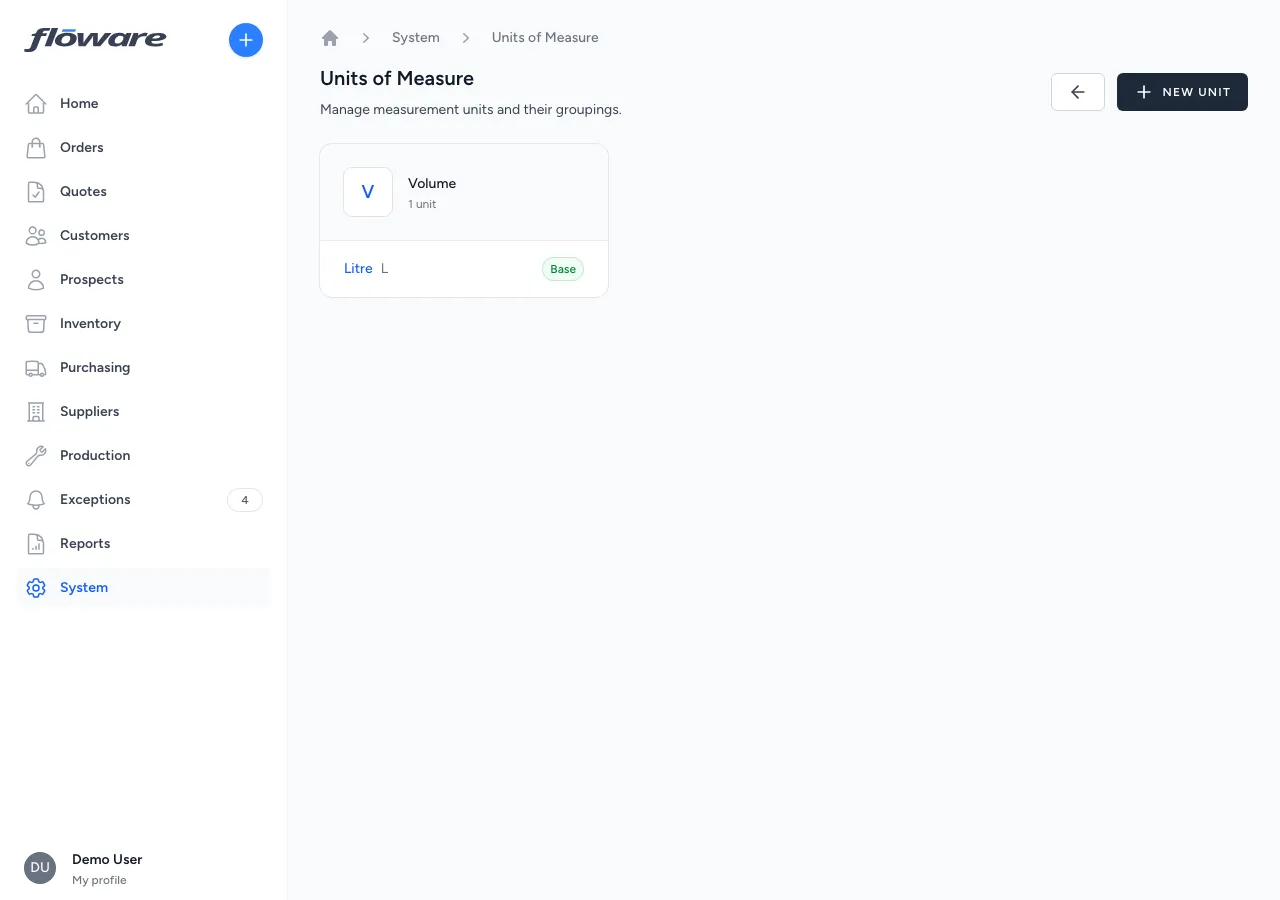
Define the units you trade in (litres, kg, cases, eaches, metres) and the system converts automatically whenever goods are bought, received, or shipped in a different unit.
- Buy in one unit, sell in another
Purchase raw materials by the kilogram, sell finished goods by the case: the system converts automatically on every order, receipt, and shipment.
- No more manual conversion errors
Predefined conversion factors mean 2 cases always equals 24 eaches, every time, without mental math on the warehouse floor.
- Unit carried on every line
Every order line, stock movement, and receipt records its unit alongside the quantity, so '10' is never ambiguously 'items or pallets?'
What it does
Lets you define the units your business trades in (litres, kilograms, cases, eaches, metres, and more) and set up conversion factors between them. Each product is assigned a base unit of measure, and the system automatically converts quantities whenever goods are ordered, received, or shipped in a different unit.
What it replaces
Replaces mental arithmetic or calculator-based conversions when buying in one unit and selling in another, and removes the ambiguity of unlabelled quantities on orders and stock reports.
Who it's for
Essential for any business that buys in one unit and sells in another: a food manufacturer purchasing flour by the tonne but selling bread by the loaf, a chemical distributor buying in bulk drums but selling in litres, or a wholesaler purchasing by the pallet but selling by the case. Also important for companies trading internationally where suppliers and customers use different measurement systems (metric vs imperial).
What problems it solves
- Products are bought and sold in different units. A manufacturer might purchase raw materials by the kilogram but sell finished goods by the case. Units of measure let you track each product in its natural unit and convert automatically when moving between purchasing, inventory, and sales.
- Manual conversion errors lead to stock discrepancies. When a warehouse operator has to mentally convert between cases and eaches, mistakes happen. The system handles conversions using predefined factors, so 2 cases always equals 24 eaches, every time.
- No standard way to record what unit a quantity refers to. Every order line, stock movement, and receipt carries its unit of measure, so there is never any ambiguity about whether "10" means 10 individual items or 10 pallets.