User Management
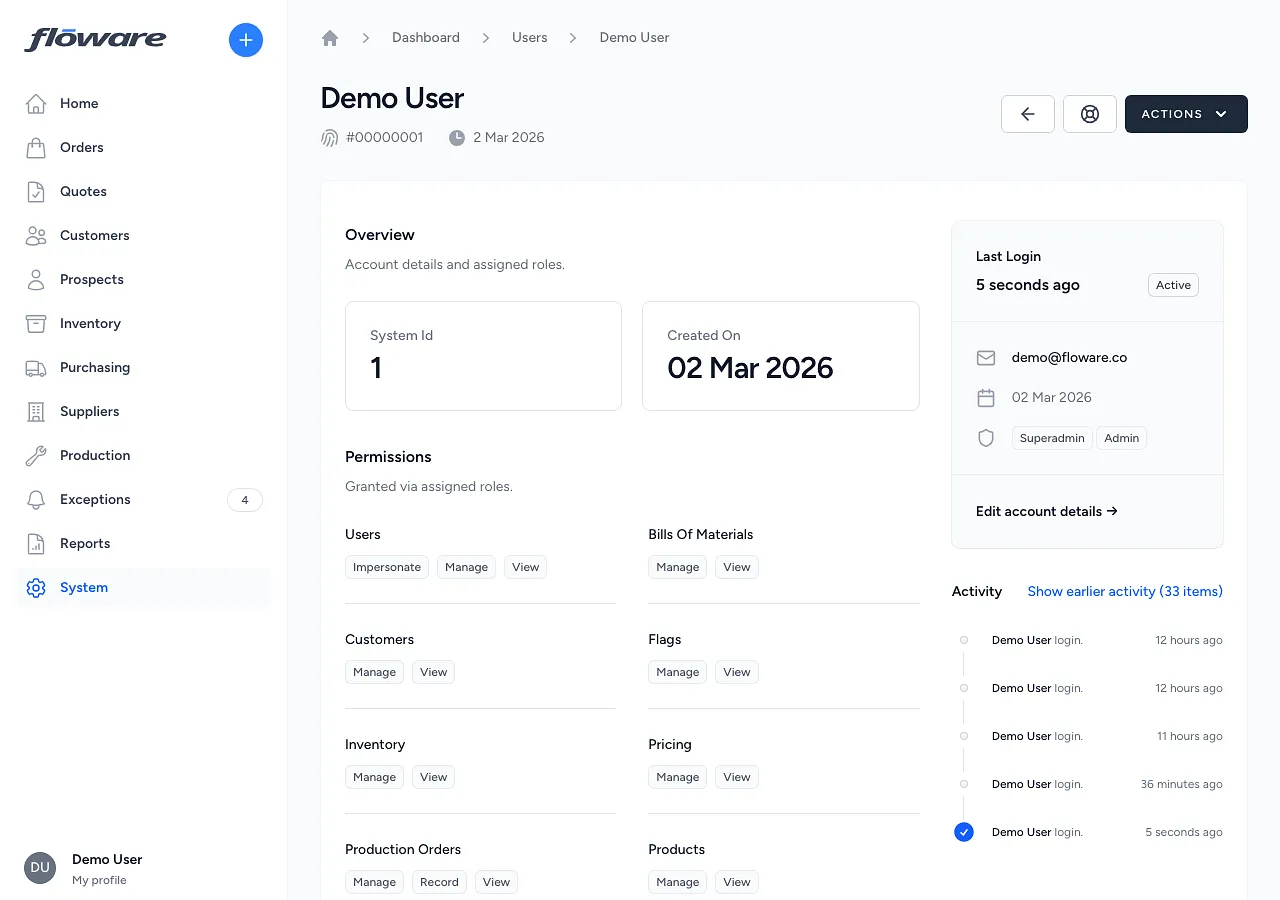
Invite team members by email, assign one of five built-in roles, and let each user manage their own profile and notification preferences. No IT involvement needed.
- Role-based access, out of the box
Admin, Sales, Warehouse, Viewer, Superadmin. Five built-in roles cover most organisations. Each role comes with permissions pre-configured.
- Invite by email, role pre-selected
Send an invite, new user clicks the link, sets their details, and they're in with the right permissions immediately. No IT ticket.
- Everyone's actions on the record
Every user has their own login, so every activity feed shows exactly who made each change and when. No shared accounts, no ambiguity.
- Users manage their own profile
Each user updates their own name, email, photo, and notification preferences, including which exception severities they want to be alerted about.
What it does
Manages who has access to the system and what they can do. Admins invite team members by email, assign them a role (Admin, Sales, Warehouse, Viewer, or Superadmin), and each role comes with a predefined set of permissions that control exactly which screens and actions that person can access. Users manage their own profile, photo, and notification preferences.
What it replaces
Replaces sharing a single login across the team, or having no access control at all, where anyone can change anything and there's no record of who did what. Without role-based access, businesses either over-share access (risky) or under-share it (frustrating).
Who it's for
Every business with more than one person using the system. Particularly important for businesses where different teams handle different functions: sales reps shouldn't be adjusting stock, warehouse staff shouldn't be changing prices, and not everyone needs access to financial data. The role system makes this separation straightforward without requiring IT involvement.
What problems it solves
- Everyone has access to everything. Five built-in roles control who can see and do what. A sales rep sees orders, quotes, and customers but can't adjust inventory. A warehouse user manages stock and purchase orders but can't change pricing. A viewer can see reports without changing data.
- Adding a new team member is slow and manual. Send an email invitation with a role pre-selected: the new user clicks the link, sets their name and password, and they're in with the right permissions immediately. No IT ticket needed.
- No record of who did what. Every user has their own login, so the activity feed on orders, quotes, and other records shows exactly who made each change and when.
- Users can't manage their own details. Each user has a profile page where they can update their name, email, photo, and notification preferences, including choosing which exception severity levels they want to be alerted about and how (immediate, daily digest, or weekly digest).