Wall Scorecards
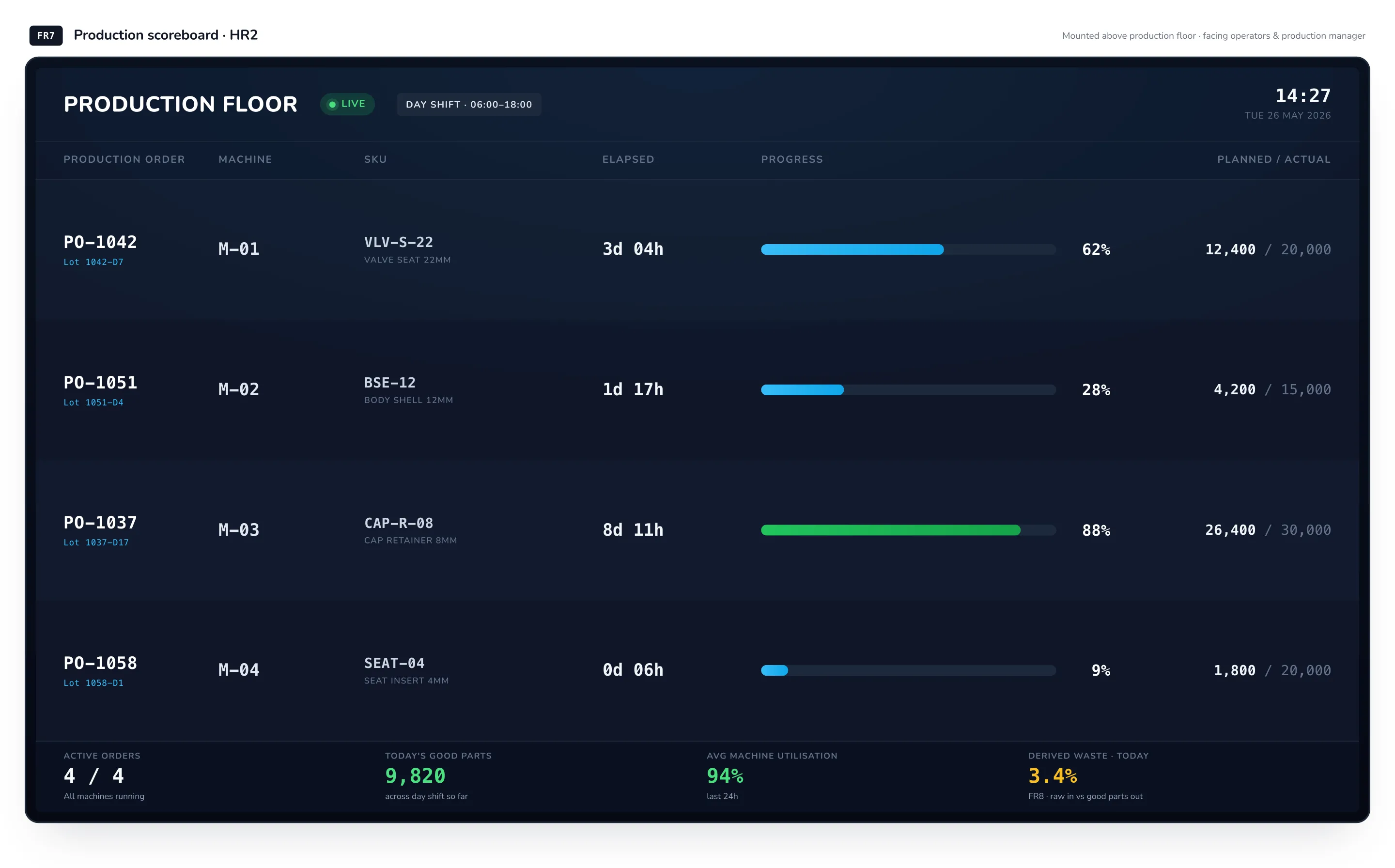
Coming soonA large screen on the wall showing the numbers that matter to the team standing in front of it: output and reject rate on the factory floor, today's orders and quotes in sales, what's landing this week in purchasing. Always on, always current, and nobody has to go and look.
- One screen, one team's numbers
Each display is set up for the area it hangs in. Production sees output against target, sales sees the day's orders and quotes going stale, purchasing sees deliveries due in. Same system, three different boards, no competing spreadsheets.
- Built from views your team already trusts
A scorecard starts as a saved view someone already uses every day, then gets shown large. Nothing new to learn and nothing to reconcile. The board and the screen on the desk are the same numbers.
- Problems surface where everyone can see them
The exceptions Floware already raises (stale orders, low stock, overdue quotes) appear on the board as they happen, so a problem is visible to the whole team the moment it occurs rather than at the next meeting.
- Unattended and always current
Refreshes on its own, comes back by itself after a power cut, and needs nobody to log in or click anything. Hang it once and it keeps working.
What it does
Wall Scorecards put Floware on a large display in the places where work actually happens: the production floor, the sales room, the purchasing desk. Each board is configured for its audience: a production board shows units completed against target, work in progress and reject rate; a sales board shows orders taken today, quotes about to expire and the value in the pipeline; a purchasing board shows what's due in this week and which suppliers are running late. The board runs unattended on a screen on the wall, refreshing itself as the underlying data changes.
Who it's for
Any operation where a group of people share a target and currently share it badly: via a whiteboard someone updates by hand, a spreadsheet on one person's screen, or a morning stand-up that relays yesterday's figures. Manufacturers get the clearest win, because output and quality are already tracked against a shift. Distributors and wholesalers get it in the sales room, where order intake and expiring quotes drive the day. Multi-branch retailers get it per branch, with the same board in every location.
What problems it solves
- Problems stop hiding until the next meeting. A stalled order, a line running behind target, or a delivery that hasn't arrived shows on the board as it happens, not in a report the following morning.
- The team stops relying on one person to look. Nobody has to open the system, run the view and relay it. The current picture is on the wall for everyone, all day.
- Numbers become shared, not owned. When the shift's output is public, accountability sits with the team doing the work rather than with whoever compiles the figures afterwards.
- The hand-updated whiteboard goes away. No more someone rubbing out and rewriting a number every hour, and no more arguments about whether the board is current.
- One version of the truth. The board is built from the same views your team already uses on their screens, so there's nothing to reconcile between the wall and the system.