Warehouse Locations
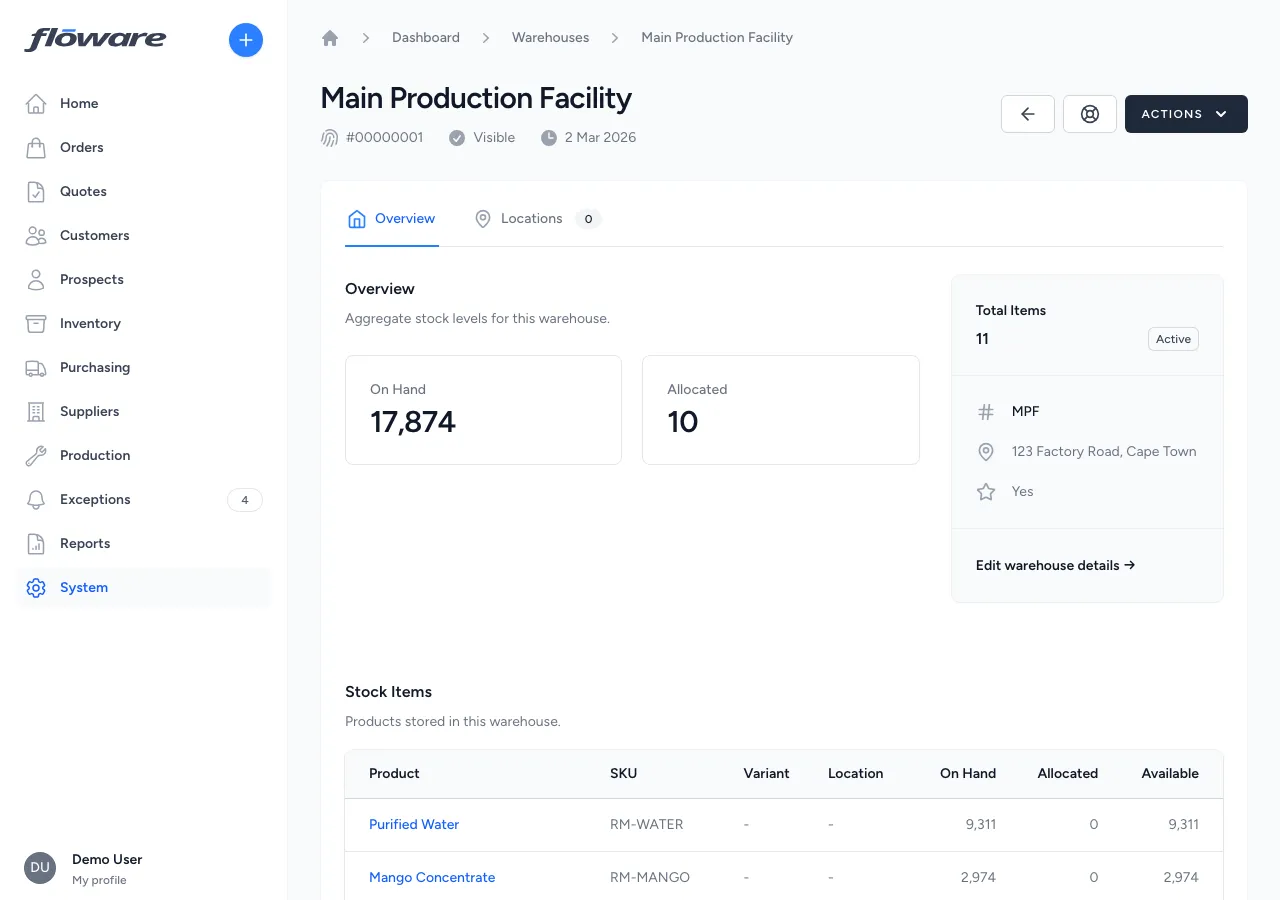
Location-level tracking within warehouses, so stock lives in Zone A, Rack 3, Bin 12, not just 'the warehouse.' Receiving, picking, and stocktakes all record the exact location.
- Know where every product lives
Stock isn't just 'in the warehouse'. It's in Zone A, Rack 3, Bin 12. Pickers get directed exactly where to go, no searching required.
- Put-away is recorded, every time
When receiving goods, the operator selects or scans the location where stock goes. That location is tied to the stock item permanently.
- Location transfers are tracked
Moving stock from one bin to another creates a movement record, so there's always a trail of where products have been and who moved them.
- Cycle count one zone at a time
Stocktakes scope to a single location, so you count one zone without halting the entire warehouse. Less disruption, more frequent counts.
What it does
Adds location-level tracking within warehouses, so stock isn't just in "the warehouse" but in a specific location like Zone A, Rack 3, or Bin 12. When enabled, every stock operation (receiving, picking, transferring, counting) can specify exactly where products are stored. Locations integrate across the system: goods receipts record where incoming stock was put away, fulfillments track where items were picked from, transfers move stock between locations, and stocktakes can be scoped to a single location for targeted cycle counts.
What it replaces
Replaces handwritten bin labels, paper-based location maps, and warehouse staff relying on memory to know where things are. Without location tracking, finding a product means walking the warehouse until you spot it, and stock counts require shutting down the entire operation instead of counting one zone at a time.
Who it's for
Businesses with medium to large warehouses where "it's somewhere in the building" isn't good enough. Particularly valuable for distributors handling high SKU counts (electronics, fasteners, building materials), food and beverage businesses needing FIFO compliance by location, and any operation where multiple staff need to independently find, put away, or pick products without asking someone where things are. Less relevant for very small warehouses where one person knows where everything is.
What problems it solves
- Staff can't find products in the warehouse. Every stock item is tracked at a specific location, so when an order needs picking, the system tells the picker exactly where to go. No searching, no guessing.
- Goods are put away randomly with no record of where. When receiving goods, the operator selects or scans the location where they're placing the stock. That location is recorded against the stock item permanently.
- Stock transfers between locations aren't tracked. Moving stock from one bin to another creates a stock movement record, so there's always a trail of where products have been and who moved them.
- Full warehouse counts are disruptive and take too long. With location tracking, stocktakes can be scoped to a single location: count one zone at a time without halting the rest of the warehouse.
- Barcode scanning doesn't know about locations. Warehouse locations can be resolved by barcode, so operators scan a location label to set context, then scan products to receive, pick, or count within that location.